XPEL PPF Alternatives | Choosing the Right Paint Protection Film
September 12, 2026
XPEL PPF and Alternatives: What Should You Look for When Choosing Paint Protection Film?
Written by Jay Bridges, Detailing and PPF Specialist at with over 15 Years of Experience.
If you have started researching Paint Protection Film for your car, there is a good chance you have already come across XPEL PPF.
XPEL is a well-known brand of Paint Protection Film, and some customers ask specifically for XPEL when they first start looking at PPF options.
When we discuss what they are actually trying to achieve, however, the requirement is often broader. They want high-quality Paint Protection Film, professionally installed, with good clarity, suitable coverage, meaningful warranty support and proper aftercare.
XPEL is one brand of PPF. There are also other established manufacturers producing professional Paint Protection Films for different applications.
The film itself is important, but the finished result is also influenced by preparation, installation technique, pattern design, edge finishing and the support provided afterwards.
This guide explains the areas we believe are worth considering before deciding which Paint Protection Film and installer are right for your vehicle.
Transparency: On Track Detailing is an independent PPF installer and is not affiliated with, authorised by or endorsed by XPEL. References to XPEL and its products in this article are for identification and informational comparison purposes only. We currently install other professional Paint Protection Films selected according to the application, our experience with the materials and the support available from the manufacturer.
Is XPEL the Same as PPF?
No.
PPF stands for Paint Protection Film.
XPEL is a brand of Paint Protection Film.
There are a number of manufacturers producing clear, satin, matte, coloured and specialist protection films.
Although individual films differ in construction and specification, Paint Protection Film generally works by placing a sacrificial protective layer over the vehicle's paintwork.
Depending on the film and the type of impact, PPF can help reduce the likelihood of damage from stone chips, road debris, light scratches, minor scuffs and other everyday hazards.
Rather than asking only:
“Should I choose XPEL?”
it is worth also asking:
“What should I look for in a good Paint Protection Film installation?”
Are There Alternatives to XPEL PPF?
Yes.
XPEL is one of several established manufacturers supplying professional Paint Protection Film.
Different manufacturers offer different product ranges, surface finishes, top coats, warranty terms and materials intended for different applications.
Some PPF installers work primarily with a single manufacturer. Others may use different products depending on what is being protected.
The film selected for a traditional gloss installation, for example, may not necessarily be the same product used for a satin conversion, coloured PPF, headlights or windscreen protection.
We therefore recommend assessing the complete installation rather than choosing solely on manufacturer name.
No film brand, by itself, determines the quality of the finished installation.
What Should You Compare When Choosing PPF?
When customers ask us about different Paint Protection Film options, there are several areas we recommend considering.
1. Optical Clarity and Finish
Clear Paint Protection Film should allow the original paintwork to remain the focus.
A well-executed installation should be discreet and should not unnecessarily change the appearance of the panels being protected.
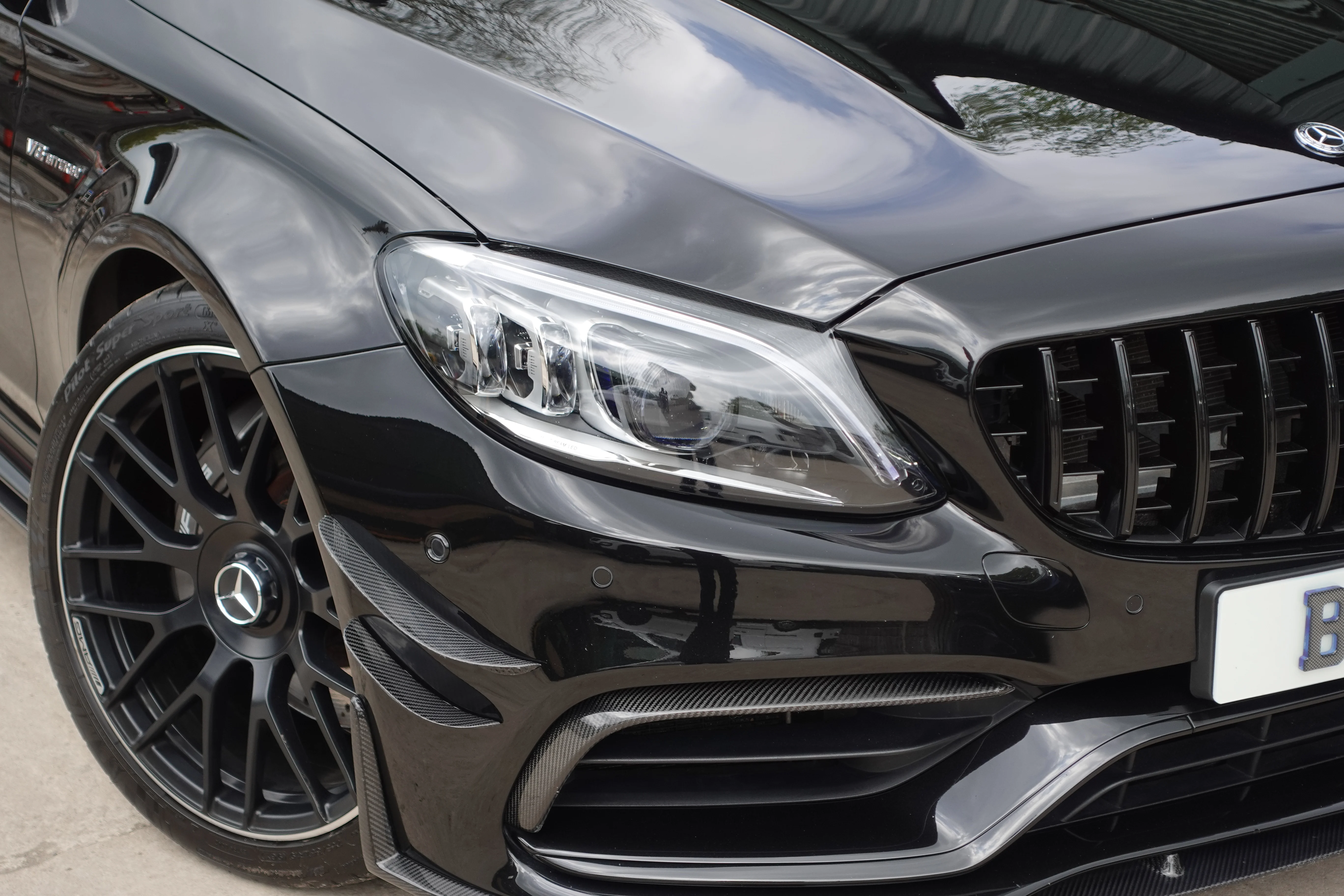
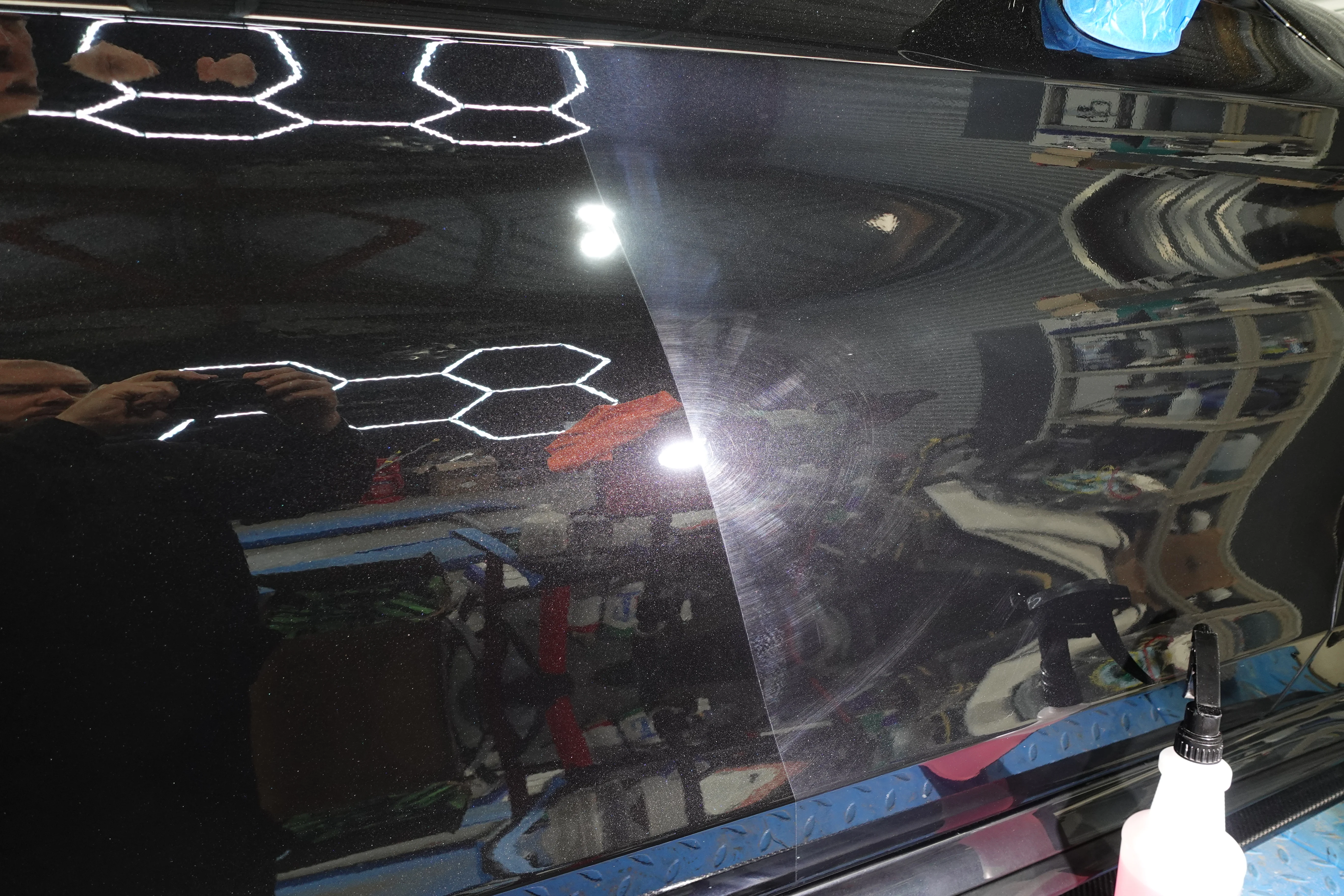
When looking at completed PPF installations, consider the clarity of the material, its surface texture, gloss and whether there is any noticeable optical distortion.
It is particularly useful to compare protected and unprotected panels on dark or metallic colours, where differences can sometimes be easier to see.
Promotional photographs can be useful, but seeing completed vehicles in person provides a much better indication of an installer's work.
2. Self-Healing Performance
Many premium modern Paint Protection Films incorporate a self-healing surface layer.
Fine scratches and light marks in the film's surface may reduce or disappear when the material becomes warm through sunlight or controlled heat.
XPEL describes ULTIMATE PLUS as featuring self-healing properties. Similar self-healing functionality is available from a number of other professional PPF manufacturers.
Self-healing should not be interpreted as meaning that the film cannot be damaged.
A sufficiently severe impact, deep scratch or sharp object can still damage or penetrate PPF.
Paint Protection Film is better understood as a sacrificial protective layer designed to reduce the likelihood of damage reaching the paintwork beneath.
3. Film Construction and Top Coat
Premium automotive Paint Protection Films are commonly manufactured using thermoplastic polyurethane, generally referred to as TPU.
The construction of the film and its surface layer can influence characteristics such as gloss, self-healing behaviour, stain resistance, water behaviour and ease of maintenance.
Different manufacturers approach these areas in different ways.
For most vehicle owners, understanding the exact chemistry is less important than selecting a suitable professional product and understanding how it performs in normal use.
A professional installer should be able to explain which film they use, why they use it and why they believe it is appropriate for your vehicle.
4. Manufacturer Warranty
Warranty is an important consideration when comparing Paint Protection Films, but the headline warranty period should not be considered in isolation.
XPEL publishes warranty information covering products within its Paint Protection Film range. The manufacturer's current terms can be viewed on the XPEL warranty information page.
Other established PPF manufacturers publish their own warranty terms.
When comparing warranties, read what is actually covered, what exclusions apply and how a claim would be dealt with.
Issues such as yellowing, cracking, blistering, delamination and other material defects may be treated differently depending on the particular product and warranty.
It is also worth establishing whether the warranty relates solely to the material or whether any installation labour is included.
The length of a warranty is useful information, but it does not on its own establish which film or installation is the most suitable.
5. The Installer's Own Guarantee
The manufacturer supplies the film.
The installer is responsible for fitting it to the vehicle.
Some issues that can occur with PPF relate to installation rather than a manufacturing defect. Examples can include lifting edges, contamination beneath the material, alignment problems or film movement around difficult areas.
For this reason, we recommend considering the installer's own workmanship guarantee alongside the manufacturer's material warranty.
At On Track Detailing, our main PPF installations include our Lifetime Installation Guarantee, which covers genuine installation issues while you own the vehicle, up to 12 years, subject to the terms of the guarantee.
We also include a complimentary post-installation health check.
One useful question to ask any installer is:
“What happens if I notice an installation issue several months after the car is completed?”
Knowing how the business handles aftercare before booking can be valuable.
6. Pre-Cut Patterns and Plotters
Modern professional PPF installation often makes use of computer-generated patterns.
These allow film sections to be digitally prepared for individual vehicle panels and cut before installation.
XPEL offers its own DAP pattern system. Other professional installers may use different commercial pattern databases.
At On Track Detailing, our patterns are cut in-house using our Graphtec FC9000 plotter.
Using a plotter enables the majority of pattern cutting to take place away from the vehicle's paintwork.
The equipment itself, however, is only one part of the process.
How the installer prepares, adjusts and fits those patterns also influences the finished result.
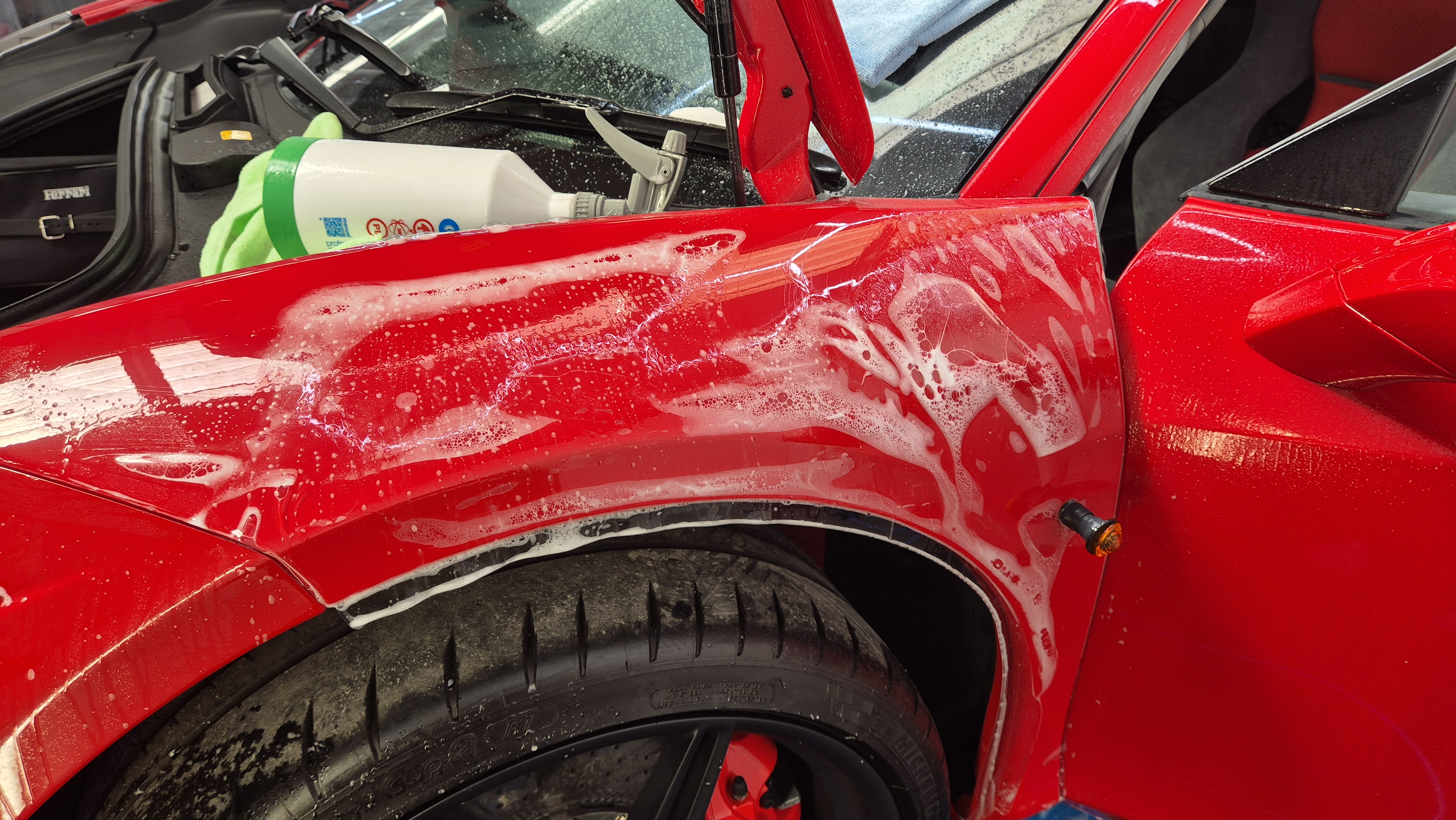
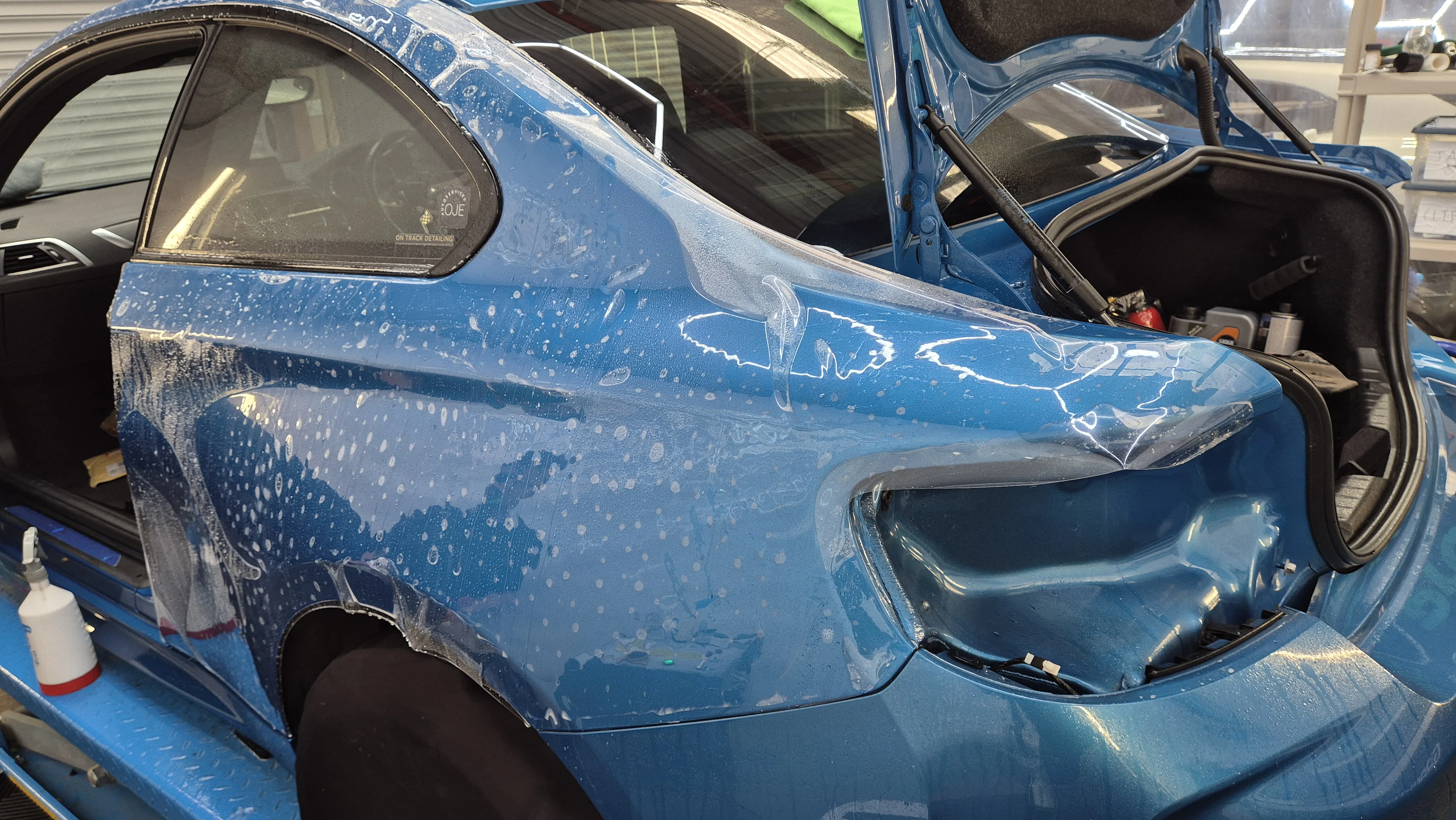
A Plotted piece of PPF, cut in house, with extensions to tuck into the rear light and boot.
7. Pattern Modification
A standard computer-generated pattern is designed to provide consistent coverage for a particular vehicle and panel.
In some circumstances, an installer may decide that modifying the pattern will improve the finished appearance or coverage.
Where appropriate, patterns can be adjusted to extend suitable edges, alter coverage or reduce unnecessary visible film lines.
Whether this is appropriate depends on the vehicle, panel construction and access available.
It is one reason that two installations using the same Paint Protection Film can still look different once completed.
8. Wrapped and Hidden Edges
Edge finishing can have a noticeable effect on the appearance of a PPF installation.
For example, one pattern may stop slightly before the physical edge of a bonnet, while another may be extended and wrapped around the panel where there is sufficient access to do so safely.
Both approaches can provide paint protection, but the visible appearance may differ.
Where practical and appropriate, we extend or wrap suitable film edges to produce a discreet finished installation.
Badges, trims, handles and other components may also be removed where doing so provides a genuine improvement to the finished result and can be carried out safely.
This is why asking:
“What film do you use?”
should also be followed by:
“How will you install it on my particular vehicle?”
9. Preparation Before PPF Installation
Preparation is an important part of Paint Protection Film installation.
Contamination, defects or residues beneath the film may remain visible once the material has been installed.
A vehicle should therefore be appropriately washed, decontaminated and inspected before installation begins.
That does not mean every vehicle requires extensive paint correction beforehand.
Fine swirl marks and some minor defects will be hidden once PPF is applied. Removing additional clear coat unnecessarily simply to achieve a theoretical level of correction may therefore offer little practical benefit.
Our approach is to assess each vehicle individually and polish or correct areas where doing so genuinely improves the finished installation.
A new or well-maintained vehicle may require very little correction.
An older vehicle, or one with previous paintwork, staining or heavier defects, may require more preparation.
10. Installation Environment
Paint Protection Film is sensitive to contamination during installation.
Dust, fibres and other debris can become trapped beneath the material, so the environment in which the work is carried out is an important consideration.
All of our PPF work is completed at our studio in Finchampstead, Berkshire, near Reading and Wokingham.
Our PPF installations are completed in-house.
This means the business discussing the installation with you is also responsible for preparing the vehicle, fitting the film and supporting the finished installation afterwards.
11. Aftercare
PPF installation does not necessarily end when the vehicle is collected.
Freshly installed Paint Protection Film requires a settling period. Some moisture may remain beneath the film initially and the material can continue settling after the vehicle leaves the studio.
For this reason, our PPF packages include a complimentary post-installation health check.
This allows us to inspect the condition of the film, edges and corners after the installation has had time to settle.
Customers can also contact us afterwards if they have questions or concerns.
When comparing installers, it is therefore worth considering what support is available after the installation has been completed.
A fully protected BMW X5M, backed by our Lifetime Installation Warranty
12. How Much PPF Do You Actually Need?
Different vehicles and owners require different levels of protection.
A vehicle used mainly for local journeys may have very different requirements from a car regularly used on motorways, European road trips or track days.
For some vehicles, protecting vulnerable areas such as headlights, rear arches or B-pillars may be sufficient.
A Full Front PPF package typically protects the front bumper, bonnet, front wings, headlights, mirrors and A-pillars.
A Track Pack adds protection to further high-impact areas, while Full-Car PPF provides coverage across virtually all painted exterior panels.
The most expensive package is not automatically the most appropriate one.
The right choice depends on what your needs are, your vehicle, how it is used, its value and how long you expect to keep it.
We recommend choosing professional Paint Protection Film from an established manufacturer with appropriate technical information, product support and a meaningful warranty.
However, the material is only one part of the completed installation.
Preparation, pattern selection, pattern modification, edge finishing, installation environment, installer experience, workmanship guarantees and aftercare can also influence the quality and appearance of the finished job.
This is why we recommend assessing the complete PPF package, rather than making the decision on film brand alone.
Why Don't We Currently Offer XPEL?
On Track Detailing is not an XPEL installer.
Our current position should not be interpreted as a claim that XPEL products are better or worse than the professional Paint Protection Films we install.
We currently install professional Paint Protection Films that we have selected based on our own experience with the materials, the finished appearance we achieve, manufacturer support and our ability to provide long-term aftercare.
Our preferred clear PPF currently comes from ProFilm, although we use other specialist materials for certain applications.
The specific film is important to us, but so is our familiarity with installing it and our confidence in supporting the product after the vehicle has left the studio.
That is how we choose the materials we are comfortable offering to our customers.
Should You Choose XPEL PPF?
XPEL may be a suitable option for an owner who specifically wants the brand and has found an experienced XPEL installer whose workmanship, warranty arrangements and aftercare meet their requirements.
If you have started searching for XPEL because it is the PPF brand you are most familiar with, we would simply suggest comparing the wider installation package before making a final decision.
Consider:
the film and published product specification
the installer's experience and examples of previous work
how the vehicle will be prepared and covered
the manufacturer warranty and installer guarantee
the aftercare provided once the installation is complete
The film brand is an important part of the decision.
We simply believe it should be considered alongside the quality of the complete installation.
We provide targeted PPF, Full Front protection, Track Pack coverage and complete full-car installations depending on the vehicle and its intended use.
Our main PPF packages include appropriate vehicle preparation, in-house plotted patterns, extended and wrapped edges where practical, ceramic coating over the installed PPF, a complimentary post-installation health check and our Lifetime Installation Guarantee.
Rather than recommending the largest package automatically, we will discuss how you use the vehicle and recommend a level of protection that makes sense for your requirements.
```html
Which PPF Package Does Your Vehicle Need?
Tell us about your vehicle, its condition and how you use it. We will recommend the most suitable paint protection film package to protect your paintwork and keep your vehicle looking its best.
No. XPEL is a supplier of Paint Protection Film. PPF is the general term used for the protective film itself.
Are there alternatives to XPEL PPF?
Yes. A number of established manufacturers produce professional clear, self-healing, satin, matte, coloured and specialist Paint Protection Films.
Is XPEL PPF good?
We would not describe XPEL as better or worse than other professional PPF brands. The individual film, its specification, installation quality, coverage, warranty and aftercare should all be considered when choosing the right protection for your vehicle.
What is the best PPF brand?
There is no single answer suitable for every vehicle or owner. Film specification, clarity, finish, warranty support, installer experience and the quality of the completed installation should all be considered.
Does the installer matter when choosing PPF?
Yes. The film is important, but preparation, pattern design, edge finishing and workmanship also affect how a PPF installation looks and performs.
Should PPF edges be wrapped?
Where panel design and access permit, wrapping suitable edges can make an installation less visible. Not every edge can safely or practically be wrapped, so this should be assessed individually.
Does PPF stop all stone chips and scratches?
No. Paint Protection Film provides a sacrificial physical barrier and can reduce the likelihood of paint damage, but sufficiently severe impacts or scratches can still damage or penetrate the film.
How long does PPF last?
The expected lifespan and warranty period vary according to the manufacturer, individual product, installation, maintenance and how the vehicle is used. Always check the warranty terms applying to the specific film being offered.
Related Cases
XPEL PPF Alternatives | Choosing the Right Paint Protection Film


.svg)





.jpg)