How Much Does Car Paint Protection Film Cost? (Full Car and Front End)
August 20, 2026
How Much Does Paint Protection Film Cost? (Full Car and Front End)
Written by Jay Bridges, a Detailing and PPF Specialist with over 15 years of experience
If you are researching paint protection film cost, you will quickly find a very wide range of prices.
That is because PPF is not one fixed package. You can protect a small number of vulnerable areas, cover the entire front of the car, add extended high-impact sections, or wrap almost every painted panel on the vehicle.
The final PPF price in the UK depends on how much paint protection film you want. Vehicle shape and complexity can have a major effect on PPF installation cost, even when two cars are similar in size.
As a general guide, full-front PPF starts from around £1,500 including VAT, Track Pack coverage is typically around £2,000, and full-car PPF usually ranges from £4,000 to £6,000 depending on the vehicle.
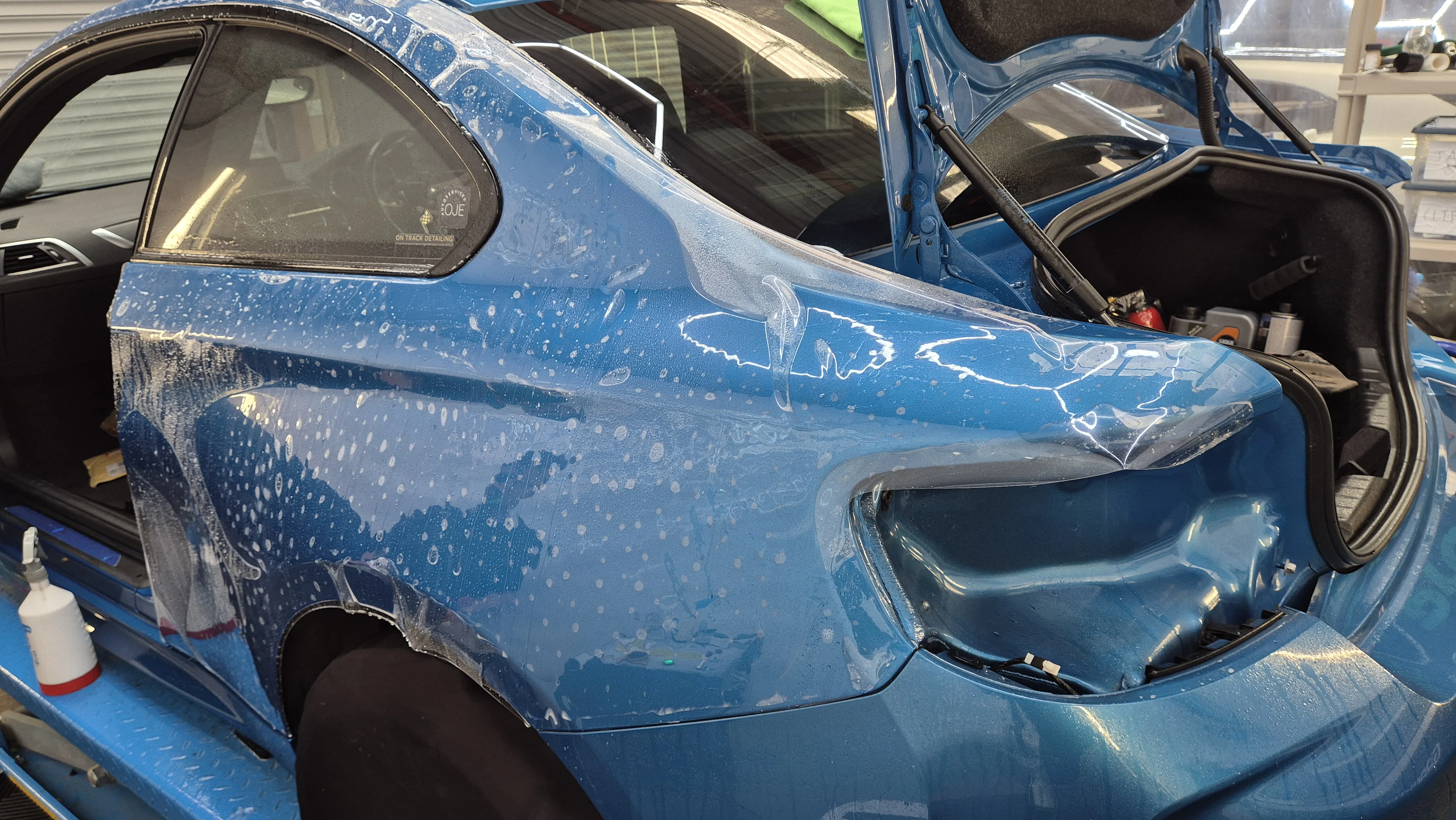
At On Track Detailing, every PPF installation is completed inside our dedicated studio near Reading and Wokingham. Patterns are plotted and cut in-house using our Graphtec FC9000, with wrapped or extended edges used where appropriate to make the finished installation as discreet as possible.
If you are comparing options, our full Paint Protection Film service page explains the films, installation process and coverage choices in more detail.
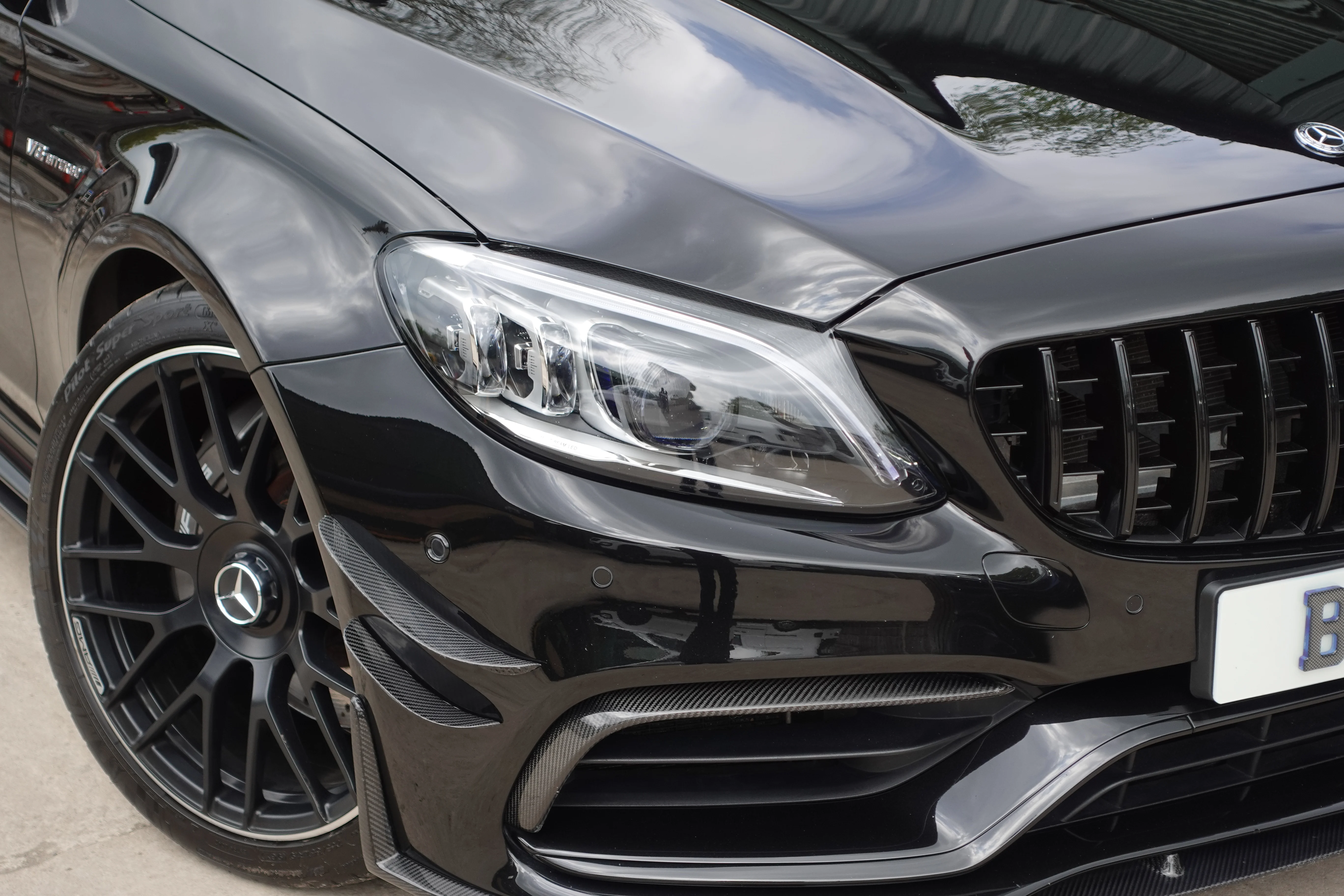
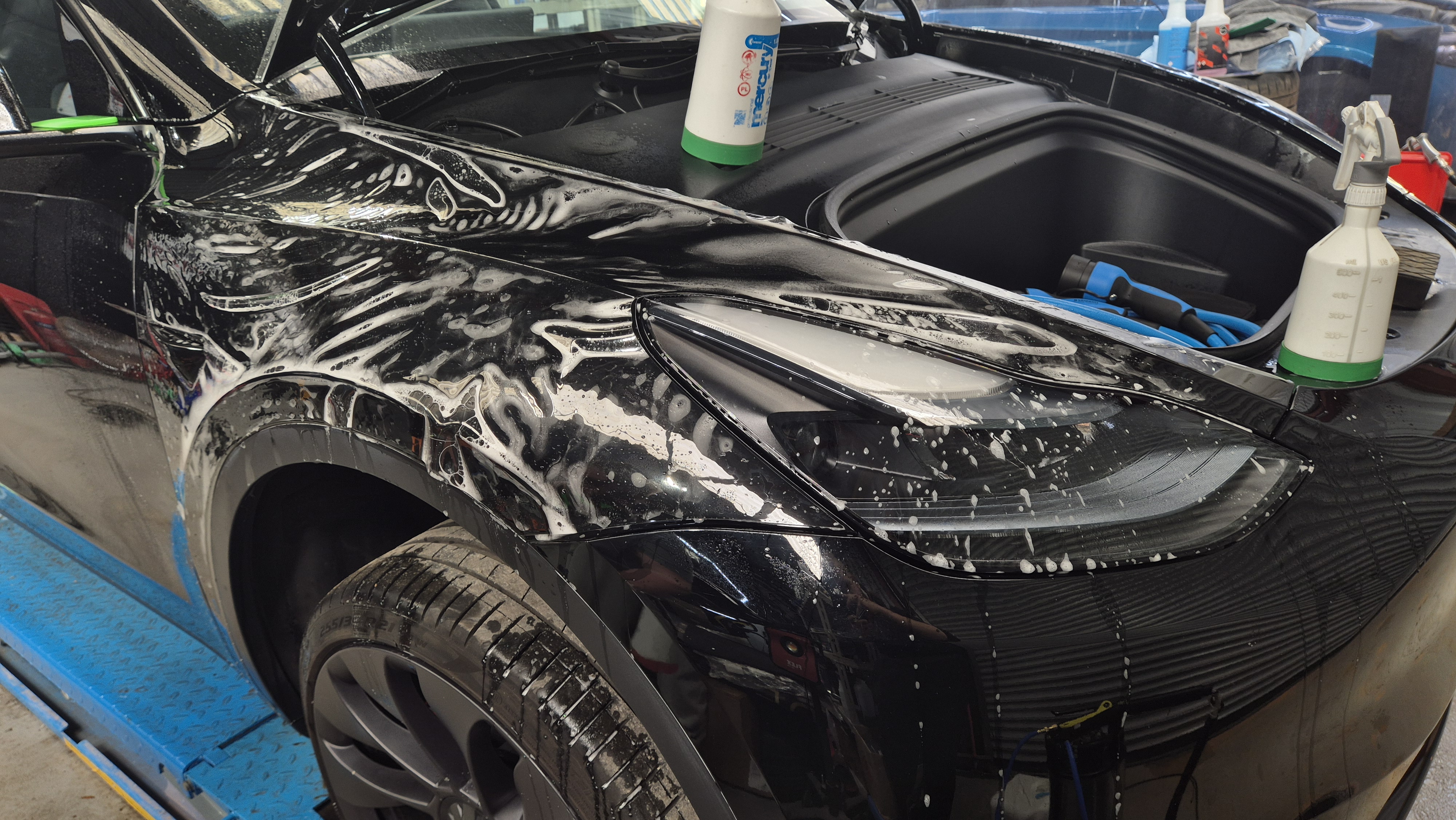
Tesla Model Y during a front-end Paint Protection Film installation at our Berkshire PPF studio.
Coverage Options and What They Cost
PPF Coverage
Typical Price
Typical Turnaround
B-Pillars or Headlights
From £80
From 1 Hour
Full Front End
From £1,250
2-3 Days
Track Pack
From £1,750
3-4 Days
Full Car
From £3,500
5-6 Days
All prices include VAT. Final pricing and turnaround depend on the vehicle, coverage and preparation required.
The biggest factor affecting paint protection film cost is simply how much of the vehicle you want covered.
A customer protecting only the front bumper and headlights will naturally pay considerably less than somebody choosing full-car PPF.
The right package depends on how the car is used, how long you plan to keep it and which areas are most likely to suffer damage.
At On Track Detailing, our current PPF packages already include targeted, front-end, extended and full-body options, with custom bulk installations also available where a conventional plotted pattern is not suitable.
Full Front PPF
A full-front package is one of the most popular choices for daily-driven, performance and higher-value cars.
Typical coverage includes the full bonnet, front bumper, front wings, headlights and wing mirrors. We can also include the A-pillars depending on the chosen package and vehicle.
This protects the areas most exposed to motorway debris and stone impacts while keeping the cost significantly lower than complete vehicle coverage.
As a general guide, full front PPF cost can start from around £1,500 including VAT for a typical vehicle, although larger or more complicated cars can cost more.
The price reflects considerably more than the film itself. The vehicle must be properly cleaned and decontaminated first, patterns need to be prepared and adjusted, and the installation requires time for positioning, edge finishing and inspection.
If most of your driving is on motorways or fast A-roads, a full-front package is often the best balance between cost and useful protection.
Track Pack / High-Impact Areas
A "Track Pack" builds on full-front coverage by protecting additional areas that are vulnerable to debris thrown up by the vehicle itself.
This can include side skirts, lower doors, A-pillars and sections around the rear wheel arches.
It is particularly useful on wider performance cars, lowered vehicles and cars used on fast road trips or track days, where the front tyres and rear arches are exposed to considerably more debris.
The exact price depends heavily on the model because some vehicles have much larger side skirts, fiddly aerodynamic trim or wide rear-quarter panels.
For this reason, Track Pack pricing is usually quoted individually rather than treated as a fixed universal package.
As a rough guide, Track Pack coverage is typically around £2,000 including VAT, although the exact price depends on the vehicle.
Full Car PPF
Full-car PPF provides the most comprehensive level of physical paint protection. It's complete peace of mind for the owner.
Every painted exterior panel is covered, including the bonnet, bumpers, wings, doors, roof, rear quarters and boot or tailgate.
The main advantage is consistency. Rather than protecting only the panels most likely to suffer stone chips, the complete car gains resistance to minor scratches, wash marks, scuffs and everyday road debris.
A full car PPF installation is a much larger undertaking than a front-end package. It uses substantially more material and requires far more preparation, plotting, fitting and finishing time.
Typical pricing can start from as little as £3,500 VAT, depending on the vehicle.
Large SUVs, complex supercars and cars with extensive carbon-fibre or aerodynamic components can cost more.
For a new, rare or long-term ownership vehicle, ask us to compare the cost of a full-front package against complete PPF. On some cars, the additional coverage represents better value over several years of ownership.
Stealth PPF and Colour Changing PPF
Stealth PPF (Matte)can transform gloss paintwork into a matte or satin finish while still providing the same physical protection against stone chips, scratches and everyday road damage. It is also a popular option for protecting factory matte finishes, such as BMW Frozen paint, without changing their appearance.
Colour PPF takes this a step further, allowing the appearance of the vehicle to be changed while adding the thicker, self-healing protection associated with Paint Protection Film.
Both options typically cost more than a conventional clear full-car PPF installation. The specialist films themselves are more expensive, and considerably more installation time is often required to achieve a convincing colour change or consistent satin finish. Areas such as panel returns, door edges and other visible sections may require additional film and workmanship so that the original colour does not remain obvious.
As a result, Stealth and Colour PPF are normally quoted individually based on the vehicle, chosen film and the level of coverage required.
Compare Our PPF Packages
Choosing PPF coverage starts with how you use your car. Full Front protection covers the areas most exposed to road debris, while a Track Pack extends protection to additional vulnerable areas. Full-car PPF provides the most extensive paint coverage.
At On Track Detailing, our PPF packages include ceramic coating over the installed film, an interior valet, a post-installation health check and our Lifetime Installation Guarantee.
Our installation guarantee covers installation issues for your ownership, up to the life of the film and a maximum of 12 years. This is separate from the film manufacturer’s warranty.
For a personalised recommendation, contact us below and we will be glad to discuss.
Which PPF package is right for your car?
Tell us your car’s make, model and the coverage you are considering. We’ll explain your options and provide a personalised quote including VAT. Free inspections are available at our Berkshire studio near Reading and Wokingham.
Porsche 911 Targa after complete full-car Paint Protection Film installation.
What Affects the Price of Paint Protection Film?
Two cars of a similar value can have very different PPF installation costs.
The film brand matters, but it is only one part of the quotation.
Film Brand and Product
Premium PPF costs more than basic film because of differences in optical clarity, self-healing performance, stain resistance and manufacturer warranty.
We only work with premium self-healing products and currently offer films carrying up to a 12-year manufacturer warranty.
Likewise, the most heavily advertised brand is not automatically the right choice for every installer or customer.
After working with and evaluating several premium films, our experience is that installation quality, pattern preparation and aftercare are more important as the brand name on the film itself.
Vehicle Shape and Complexity
A relatively flat bonnet is easier to cover than a bumper containing deep vents, sharp returns and multiple aerodynamic sections.
Difficult shapes can require more film, additional pattern adjustments and significantly more installation time.
Cars with removable badges, spoilers, carbon-fibre trim, sensors and intricate bumper sections can also require extra preparation.
This is why quoting PPF solely according to vehicle size can be misleading.
A compact sports car with a highly stylised front bumper may require more work than a physically larger but simpler saloon.
Pattern Availability
For virtually all modern vehicles, professional pattern databases provide accurate computer-cut templates.
At our studio, those patterns are plotted in-house using our Graphtec FC9000. We have access to mulitple pattern databases
We can adjust and extend patterns where appropriate rather than simply installing the default template exactly as supplied.
Where a suitable plotted pattern is unavailable, we can also carry out custom bulk installations, particularly on classic, modified and unusual vehicles.
Paint Preparation
PPF should not simply be installed over dirty or heavily contaminated paintwork.
The car needs to be safely cleaned and fully decontaminated first. Where defects are deep enough to remain visible beneath the film, localised polishing or paint repair may still be worthwhile before installation.
For this reason, we inspect the paintwork first and only recommend correction where it will genuinely improve the finished result.
Our PPF process therefore includes thorough surface preparation and paint correction where needed before installation.
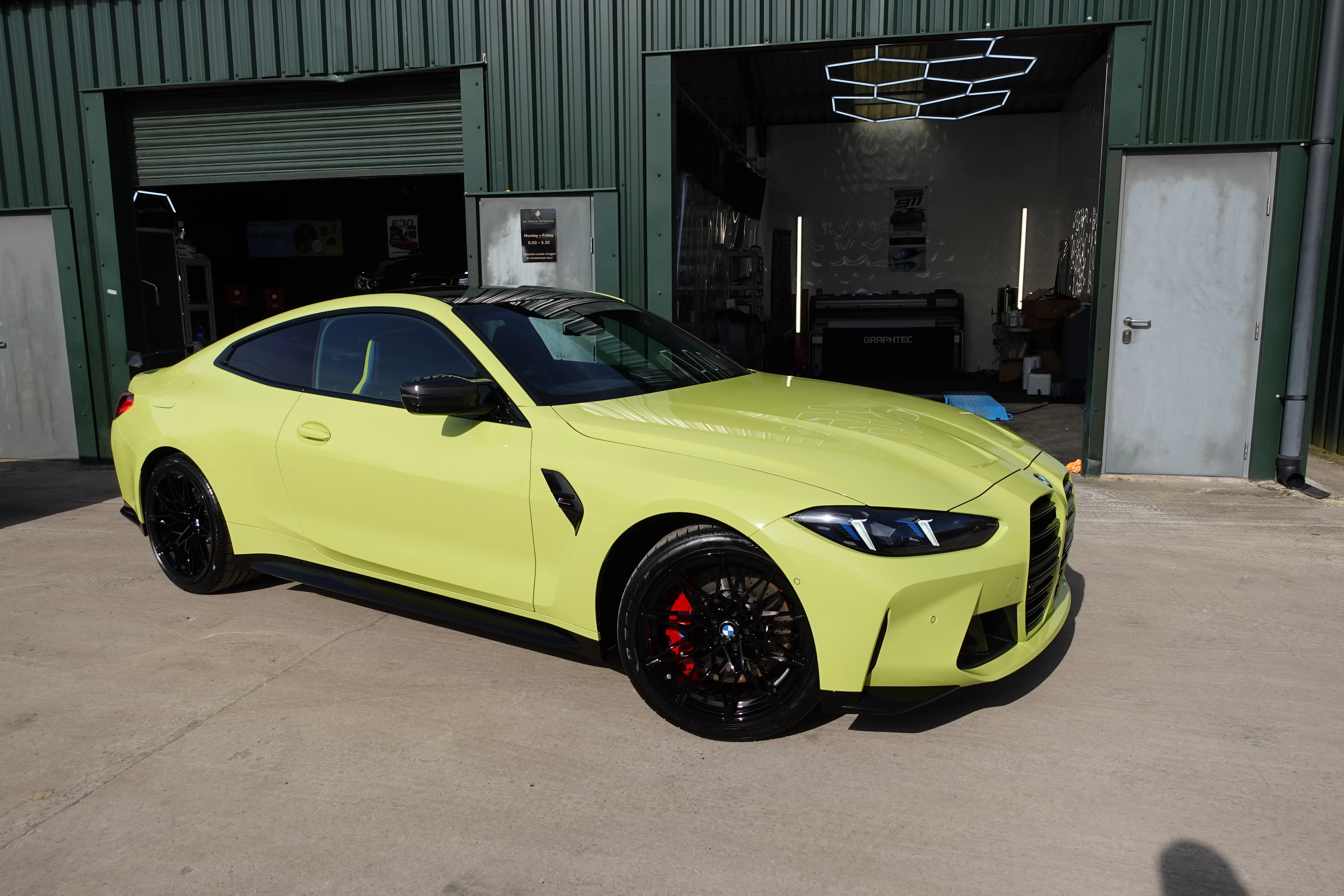
BMW M4 G82 After Full Car Paint Protection Film Installation.
Why Can PPF Quotes Vary So Much?
This is one of the most common questions we receive.
Two companies may both advertise “full-front PPF”, but the actual service can be quite different.
One quotation may use a standard pattern with limited edge extension and a simpler preparation process. Another may include paint decontamination, machine polishing, extended patterns, wrapped edges, badge removal and free follow-up inspection.
There can also be differences in film quality, insurance, warranty support, skill and the time allocated to the installation - As well as VAT registration status.
That does not automatically mean the most expensive quotation is the best.
The important thing is to compare the actual coverage and installation process rather than simply the headline PPF price UK figure.
Ask:
Which panels are fully covered?
Are edges extended or wrapped where possible?
Are the patterns plotted and cut in-house?
How long is the film manufacturer warranty?
What happens if an edge lifts after installation?
Are you VAT registered?
Those questions usually explain most of the difference between quotations.
PPF vs Ceramic Coating: Cost and Protection Compared
Paint Protection Film and ceramic coating are often compared, but they perform different jobs.
A ceramic coating primarily provides chemical protection. It improves gloss, repels water and contamination and makes the car easier to clean.
PPF is a much thicker physical barrier designed to protect the underlying paint against stone chips, scratches, minor scuffs and road debris.
This difference is reflected in the cost.
A professional ceramic coating package may start from a few hundred pounds, while even partial car paint protection film generally costs more because of the material cost and the amount of skilled fitting involved.
For example, our ceramic protection packages start from £499, while full-front PPF starts considerably higher.
That does not mean PPF automatically replaces ceramic coating.
For many customers, the best solution is to combine the two. PPF is installed on high-impact areas, then ceramic protection is applied over the film and remaining paintwork to improve water behaviour and ease of maintenance.
If your main concern is stone chips, choose PPF first. If your priority is easier washing and chemical protection, ceramic coating may be sufficient. If you want both, the two systems work very well together.
Is Full-Car PPF Worth It?
For every car? No.
For the right vehicle and owner, absolutely.
Full-car PPF makes the most sense when the cost of protecting the paintwork is proportionate to the value of the vehicle and how long you plan to keep it.
It is particularly attractive for new, rare, high-value or enthusiast-owned cars where maintaining the finish matters.
It can also make sense for vehicles used frequently on motorways, European road trips or track days where the paint is exposed to much more debris.
The benefit is not only stone-chip protection.
Full-car PPF can also protect against light scratches, wash marks, minor scuffs and accidental contact that would otherwise require polishing or repainting.
There is also a practical resale argument. Original factory paint is often desirable on high-value vehicles, and protecting it from the beginning can help preserve the condition of the car throughout ownership.
However, spending £5,000 on complete PPF for an inexpensive older daily driver may not be financially sensible.
In that situation, a front-end or targeted high-impact package may provide much better value.
The right question is not simply:
“Is full-car PPF worth it?”
It is:
“Is full-car PPF worth it for this particular car, how I use it and how long I intend to keep it?”
Send us your make, model and how you use the vehicle. We can recommend whether targeted, full-front, Track Pack or full-car protection is the most proportionate option.
Is Cheap PPF Worth Considering?
Lower-cost PPF services can be appealing, particularly when comparing quotations online.
There is nothing inherently wrong with a competitively priced installation, but it is worth understanding where savings may have been made.
A cheaper package may use a lower-cost film, allow less preparation time, rely on standard patterns without modification or include less aftercare once the vehicle has left the installer.
PPF is highly sensitive to contamination, and dust or debris trapped beneath the film can remain visible for the lifetime of the installation.
Our installations are completed inside a dedicated studio and PPF clean area rather than outdoors or on a driveway.
The warranty is another important consideration.
A long manufacturer film warranty is useful, but customers should also ask who will deal with an installation issue such as a lifting edge, contamination or a section that needs to be replaced.
The installer and their aftercare are just as important as the logo printed on the film box.
Is Paint Correction Required Before PPF Is Installed?
Not always.
This is something that is often misunderstood when people are comparing paint protection film services.
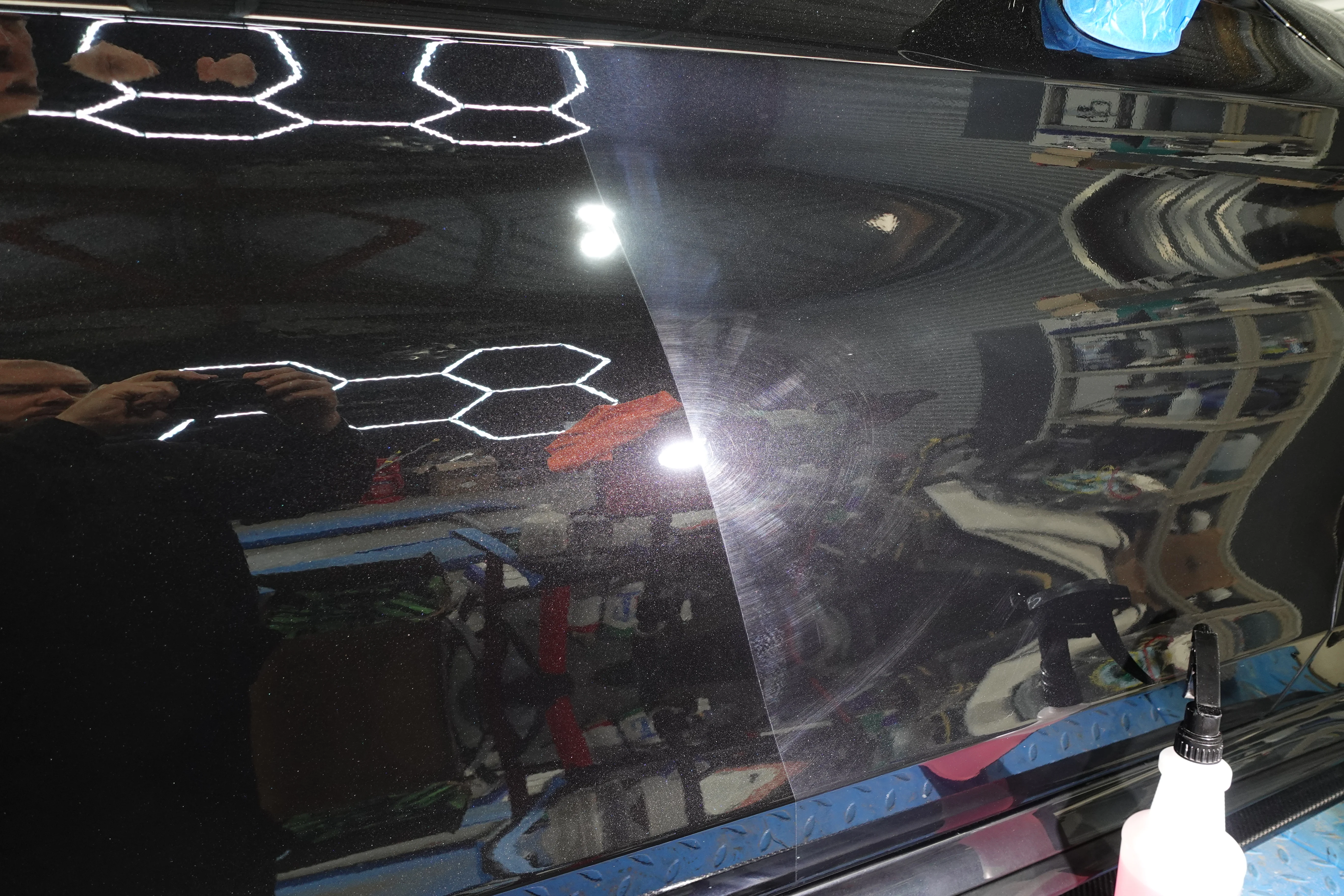
PPF is extremely effective at visually hiding light swirl marks, fine scratches and even sanding marks once it is installed over the paintwork. The adhesive and thickness of the film help level the appearance of defects, which means a full paint correction before installation is often unnecessary.
That matters because paint correction works by removing a small amount of clear coat.
If the goal of fitting PPF is to preserve the original paintwork for as long as possible, there is little benefit in aggressively polishing away healthy clear coat simply to chase defects that the film itself will fully conceal.
We will still prepare the paint properly before installation. The vehicle is washed, decontaminated and inspected, and localised polishing can be carried out where it will genuinely improve the finished result. Deeper scratches, staining, obvious machine-polishing defects or marks that are unlikely to disappear beneath the film may still need correcting first.
What we generally do not recommend is automatically carrying out a full multi-stage correction on every vehicle simply because PPF is being fitted.
We have also demonstrated this in a short video showing what can remain underneath previously installed PPF and why full correction is not always necessary before installation.
Why Do Some PPF Packages Include a “Full Paint Correction”?
There is nothing wrong with correcting paint when it genuinely needs it, but customers should understand what is actually necessary before the film goes on.
In our experience, we have removed existing PPF from vehicles that were previously sold as having received extensive paint correction beforehand, only to find swirl marks and other defects still present underneath.
That does not mean every installer making this claim is doing anything wrong, and there is no way for us to know what process another business has actually carried out. It does, however, influence how we describe our own service.
We would rather tell you that the paint does not need unnecessary correction than charge you for a process simply because it sounds more comprehensive.
Our approach is straightforward: preserve as much original clear coat as possible, correct what genuinely needs correcting and allow the PPF to do what it is designed to do.
For a new or well-maintained car, that may mean little more than thorough decontamination and light localised refinement. For an older or more heavily marked vehicle, additional correction may still make sense after inspection.
Does PPF Prevent Swirl Marks?
One of the practical benefits of modern Paint Protection Film is how resistant it is to the fine swirl marks that normally build up on unprotected paintwork.
With sensible maintenance, premium self-healing PPF is effectively immune to most light wash marring and fine swirls. The film's top layer can absorb and recover from light surface marks - helping the finish stay swirl-free for longer.
That does not mean PPF cannot be damaged. Poor washing techniques, dirty cloths, aggressive brushes or deliberate abrasion can still mark the surface. But compared with exposed clear coat, correctly maintained PPF is far more forgiving.
For owners of darker cars in particular, this can make a noticeable difference. Black and other deep colours show fine wash marks very quickly, whereas protected panels tend to retain a cleaner, glossier appearance with normal hand washing.
PPF still needs to be washed safely, but for everyday maintenance it gives the paintwork a much greater margin of protection against the swirl marks that would otherwise accumulate over time.
Why Choose On Track Detailing for PPF?
Every PPF installation is completed in-house at our dedicated studio near Reading and Wokingham.
We use our own Graphtec FC9000 plotter, premium self-healing film and professional pattern databases, allowing us to tailor coverage to the vehicle rather than relying solely on standard externally supplied kits. Where appropriate, edges are extended or wrapped to make the finished installation as discreet as possible.
With more than 20 years of hands-on experience and over 150 five-star Google reviews, we place just as much emphasis on preparation and aftercare as we do on the installation itself.
Lifetime Installation Guarantee - if an issue develops with our installation, we will rectify it free of charge for as long as you own the vehicle, up to 12 years.
Free post-installation health check - we invite you back after installation so we can inspect the film, check edges and make sure everything is settling as it should.
Free ceramic coating over the PPF - all PPF is ceramic coated at no additional cost, helping improve water behaviour and make regular maintenance easier.
Free interior valet - included so the vehicle feels properly finished when you collect it.
No subcontractors - all PPF installations are completed by our own full-time team.
We are fully insured for customer vehicles while they are in our care and provide ongoing 24x7 aftercare and support once the vehicle leaves the studio.
PPF can also be combined with paint correction, wheel protection, brake caliper refinishing, ceramic coating for unprotected panels and other detailing services during the same booking where appropriate.
Our aim is to recommend the right level of protection for the way you use the car, install it properly and remain available if you ever need us afterwards.
Frequently Asked Questions
How much does Paint Protection Film cost in the UK?
The cost depends primarily on the amount of coverage and the complexity of the vehicle.
Targeted protection can cost a few hundred pounds, full-front packages can start from around £1,500, while complete full-car PPF commonly reaches £4,000-£6,000 or more.
How much does full front PPF cost?
For a typical vehicle, full front PPF cost can start from around £1500 including VAT.
Larger vehicles and complex front bumpers may cost more.
Always check exactly which panels are included because “front-end PPF” can mean different things between installers.
How much does full-car PPF cost?
A typical full-car installation can cost around £4,000-£6,000+ depending on the size and design of the vehicle, film choice and preparation required.
How long does PPF last?
High-quality PPF can carry manufacturer warranties of 10-12 years.
Actual life depends on the film, vehicle use, storage and maintenance. Our premium films are available with warranties of up to 12 years.
Does PPF damage the paint when removed?
Professionally installed PPF can normally be removed safely from sound factory paintwork.
Previously repainted panels should be treated with more caution because the quality and adhesion of aftermarket paint can vary.
Can PPF be fitted to an older car?
Yes.
The paintwork should first be inspected to determine whether correction or repairs are advisable before film installation. We have installed PPF on used cars with 60,000 + Miles and the results are very good.
Is PPF better than ceramic coating?
For physical protection, yes. PPF is considerably better at protecting against stone chips, scratches and minor scuffs.
Ceramic coating is cheaper and better suited to chemical protection, water repellency and easier maintenance.
Many owners combine both.
Is full-car PPF worth the extra cost?
It can be for high-value, new or cherished vehicles where protecting the original paint is a priority. It can also appeal to those who simply do not want to have swirl marks any more.
For many everyday cars, targeted or full-front protection offers a more economical balance.
Can I pressure wash a PPF-covered car?
Yes. PPF can be pressure washed safely when sensible technique is used. Avoid holding the lance extremely close to film edges or directing concentrated pressure underneath an edge.
Choosing the Right Paint Protection Film Package
There is no single correct paint protection film cost for every vehicle.
A fair quotation should reflect how much of the car is being protected, the film being used, vehicle complexity, paint preparation and the amount of installation time required.
The cheapest quotation may be completely appropriate if you only want simple targeted protection.
Likewise, a higher quotation may include significantly more coverage, better preparation, wrapped edges and longer aftercare support.
At On Track Detailing, we install car paint protection film from our dedicated studio near Reading and Wokingham In Berkshire - with options ranging from individual panels through to complete full-car coverage.
You can explore our Paint Protection Film services for more information on coverage, film options and our installation process.
If you send us the make, model and year of your vehicle, we can recommend the most suitable coverage and provide a clear quotation before you book.


.svg)





.jpg)
.jpg)